
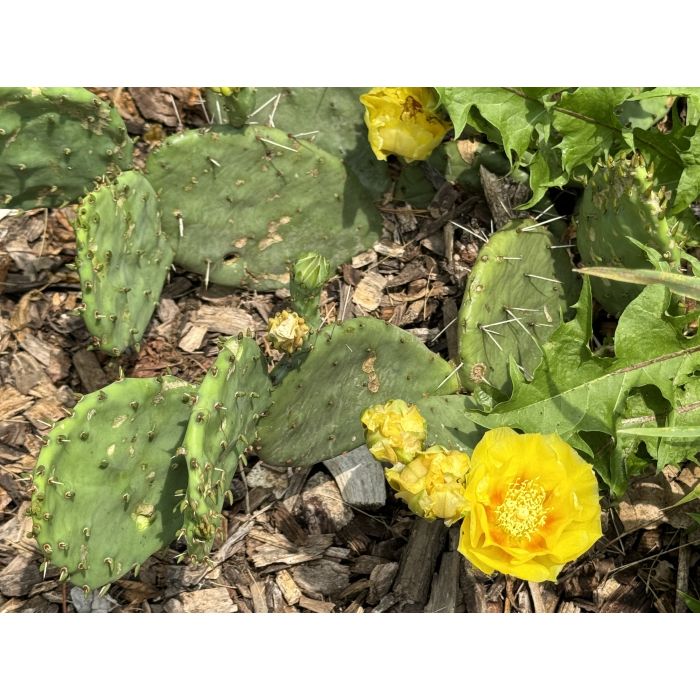
Hardy Eastern Prickly Pear Cactus Seeds (Naturally Grown)
Eastern Hardy Prickly Pear Cactus, is a low-growing, mat-forming, perennial succulent native to the eastern United States and Mexico. It is notable for being the only cactus widespread in the eastern U.S. and for its winter hardiness. Growth Habit: This cactus is clump-forming and semi-prostrate, with its pads sprawling along the ground, typically reaching a height of 6 to 14 inches and spreading up to 2 feet wide. Pads: It features flat, fleshy, green, oval-to-round stem segments (cladodes) that are covered with clusters of minute, barbed, reddish-brown bristles called glochids, which can be very irritating to the skin. Flowers: Showy, bright yellow, waxy flowers, often with reddish centers, bloom from late spring to early summer. Each flower typically lasts only one day, but the plant produces many buds, resulting in a bloom period of about a month. Fruit: After flowering, a pulpy, red, egg-shaped fruit (up to 2 inches long) develops, ripening in late summer or fall. These fruits, along with the young pads (nopales), are edible after careful preparation to remove the spines and glochids. Habitat: It thrives in dry, sandy, or rocky, well-drained soils and full sun exposure. It is highly drought and salt-tolerant, often found in rocky glades, prairies, dunes, and coastal areas. Wildlife Value: The plant provides cover for small animals, and its fruits are a food source for birds and other wildlife. The flowers attract a variety of pollinators, including bees and butterflies. Cultivation and Uses Landscaping: Due to its hardiness and drought tolerance, Opuntia humifusa is ideal for xeriscaping, rock gardens, and native plant gardens. Edible Uses: Both the pads (as a vegetable) and the red fruits (often used for jellies, candies, and juices) are edible once the barbs and skin are properly removed. Medicinal Uses: Native Americans used the sap from the plant for certain medicinal applications.
| Botanical Name | Opuntia humifusa |
|---|---|
| Seeds Per Pack | 5 |
| Life Cycle | Perennial |
| Min. Time to Germinate | 14 Days |
| Max. Time to Germinate | 6 Months |
| Depth to Sow Seeds | 1/8 in. |
| When to Sow | Indoors 6-8 weeks before last spring frost |
| Growing Height | 6-12 in. (15-30 cm) |
| Plant Spacing | 15-18 in. (38-45 cm) |
| Hardiness | USDA Zone 4b: to -20F, USDA Zone 5a: to -15F, USDA Zone 5b: to -10F, USDA Zone 6a: to -5F, USDA Zone 6b: to 0F, USDA Zone 7a: to 5F, USDA Zone 7b: to 10F, USDA Zone 8a: to 15F, USDA Zone 8b: to 20F, USDA Zone 9a: to 25F, USDA Zone 9b: to 30F |
| Sun Exposure | Full Sun |
| Danger | Plant has spines or sharp edges; use extreme caution when handling |
| Bloom Color | Pale Yellow |
| Bloom Time | Late Spring/Early Summer, Mid-Spring |
| Foliage | Blue-Green |
| Other Details | Average Water Needs; Water regularly; do not overwater, Drought-tolerant; suitable for xeriscaping |
| Soil pH Requirements | 6.1 to 6.5 (mildly acidic), 6.6 to 7.5 (neutral), 7.6 to 7.8 (mildly alkaline) |
| Propagation Methods | Allow cut surface to callous over before planting, From seed; direct sow after last frost, From seed; stratify if sowing indoors, From softwood cuttings, From woody stem cuttings |
| Seed Collecting | Allow unblemished fruit to ripen; clean and dry seeds, Properly cleaned, seed can be successfully stored, Unblemished fruit must be significantly overripe before harvesting seed; clean and dry seeds |