
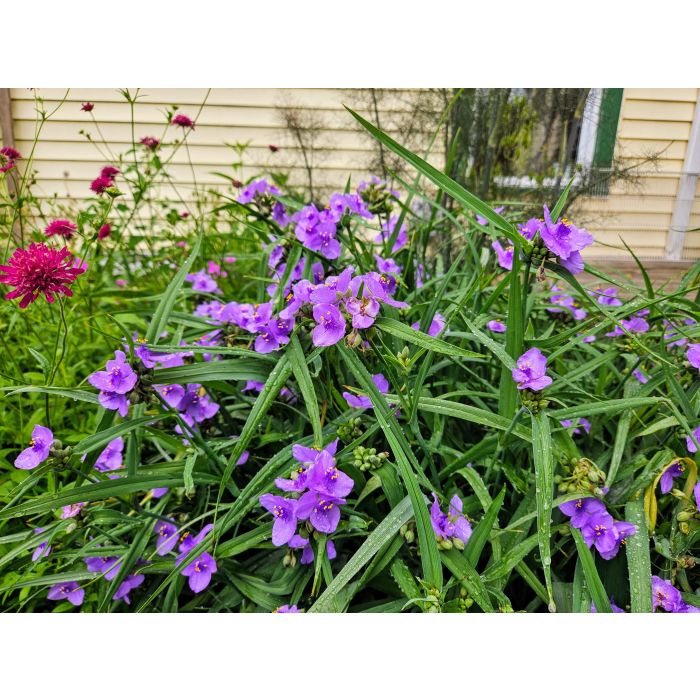
Spiderwort AKA Spider Lily, Purple Seeds (Naturally Grown)
Spiderwort is a distinctive perennial plant noted for its charming, light purple flowers, each bloom composed of three delicate petals surrounding vibrant central stamens tipped with eye-catching chartreuse anthers. The plant forms attractive clumps with graceful, arching, grass-like foliage, making it an excellent choice for edging garden beds. Spiderwort thrives in moist soils and grows well in a variety of climates, from cold to tropical, preferring partial to full shade and moderate watering. This fast-growing, clumping perennial typically reaches about 12 inches tall, blooming profusely in spring and summer.
While spiderwort seeds can initially be challenging to germinate, established plants become exceptionally low-maintenance, reliably returning year after year with minimal care. Each morning during bloom season, new flowers appear, replacing the previous day's spent blossoms, creating a beautiful daily display. These nectar-rich flowers attract honeybees and other pollinators, adding ecological value to the garden. The blossoms also contain a purplish dye, which can stain hands and clothing during seed harvesting, offering a charming reminder of spiderwort’s vivid beauty.
| Botanical Name | Tradescantia virginiana |
|---|---|
| Seeds Per Pack | 50 |
| Life Cycle | Perennial |
| Min. Time to Germinate | 30 Days |
| Max. Time to Germinate | 40 Days |
| Depth to Sow Seeds | Just Cover; barely cover with soil |
| When to Sow | Indoors 8-10 weeks before last spring frost |
| Growing Height | 18-24 in. (45-60 cm) |
| Plant Spacing | 6-9 in. (15-22 cm) |
| Hardiness | USDA Zone 4a: to -25F, USDA Zone 4b: to -20F, USDA Zone 5a: to -15F, USDA Zone 5b: to -10F, USDA Zone 6a: to -5F, USDA Zone 6b: to 0F, USDA Zone 7a: to 5F, USDA Zone 7b: to 10F, USDA Zone 8a: to 15F, USDA Zone 8b: to 20F, USDA Zone 9a: to 25F, USDA Zone 9b: to 30F |
| Sun Exposure | Full Sun, Sun to Partial Shade |
| Danger | N/A |
| Bloom Color | Purple |
| Bloom Time | Late Spring/Early Summer, Late Summer/Early Fall, Mid-Summer |
| Foliage | Herbaceous |
| Other Details | Average Water Needs; Water regularly; do not overwater, This plant is attractive to bees, butterflies and/or birds |
| Soil pH Requirements | 6.6 to 7.5 (neutral) |
| Propagation Methods | By dividing rhizomes, tubers, corms or bulbs (including offsets), From seed; direct sow after last frost, From seed; sow indoors before last frost |
| Seed Collecting | Allow pods to dry on plant; break open to collect seeds |