More Information
| Botanical Name |
Acmella oleracea |
| Seeds Per Pack |
50 |
| Life Cycle |
Annual |
| Min. Time to Germinate |
14 Days |
| Max. Time to Germinate |
21 Days |
| Depth to Sow Seeds |
Surface Sow; press seeds gently into the soil to make good contact, but do not cover with any additional soil; these seeds require light to germinate |
| When to Sow |
Indoors 4-6 weeks before last spring frost |
| Growing Height |
12-18 in. (30-45 cm) |
| Plant Spacing |
12-15 in. (30-38 cm) |
| Hardiness |
USDA Zone 9b: to 30F, USDA Zone 10a: to 35F, USDA Zone 10b: to 40F, USDA Zone 11a: to 45F |
| Sun Exposure |
Full Sun, Sun to Partial Shade |
| Danger |
N/A |
| Bloom Color |
Bright Yellow, Red |
| Bloom Time |
Late Summer/Early Fall, Mid-Summer |
| Foliage |
Aromatic, Evergreen, Grown for Foliage |
| Other Details |
Average Water Needs; Water regularly; do not overwater |
| Soil pH Requirements |
6.1 to 6.5 (mildly acidic), 6.6 to 7.5 (neutral) |
| Propagation Methods |
From seed; direct sow after last frost, From seed; sow indoors before last frost |
| Seed Collecting |
Allow seedheads to dry on plants; remove and collect seeds, Properly cleaned, seed can be successfully stored |
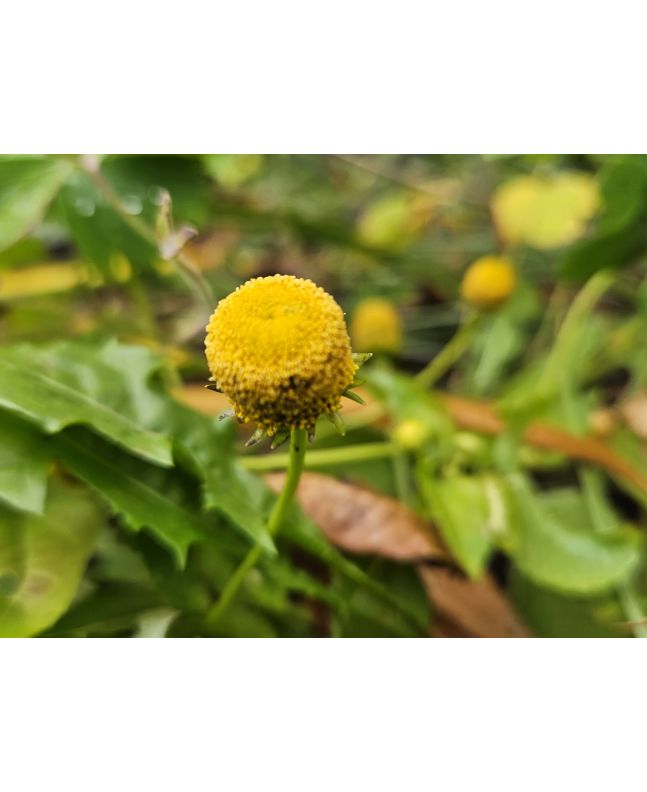
Yellow Eyeball Plant, also called toothache plant, paracress, or spilanthes (Acmella oleracea), is a playful garden oddity with button-like golden flowers. Easy to grow from seed, it forms a compact, mounded plant about 12 to 24 inches tall that thrives in full sun to part shade with evenly moist, well-drained soil, blooming from summer into fall. The bronzy green foliage is attractive in beds and containers, and the blooms make a fun, conversation-starting cut flower. Leaves and flower buds are edible and famously deliver a tingly, numbing “electric” bite, which is why they have long been chewed as a traditional toothache herb and used to spark up salads and cocktails.